
Last updated October 31, 2026
 House lockouts
 Re-keying
 Deadbolt upgrades
 Smart locks
 Schlage
 Kwikset
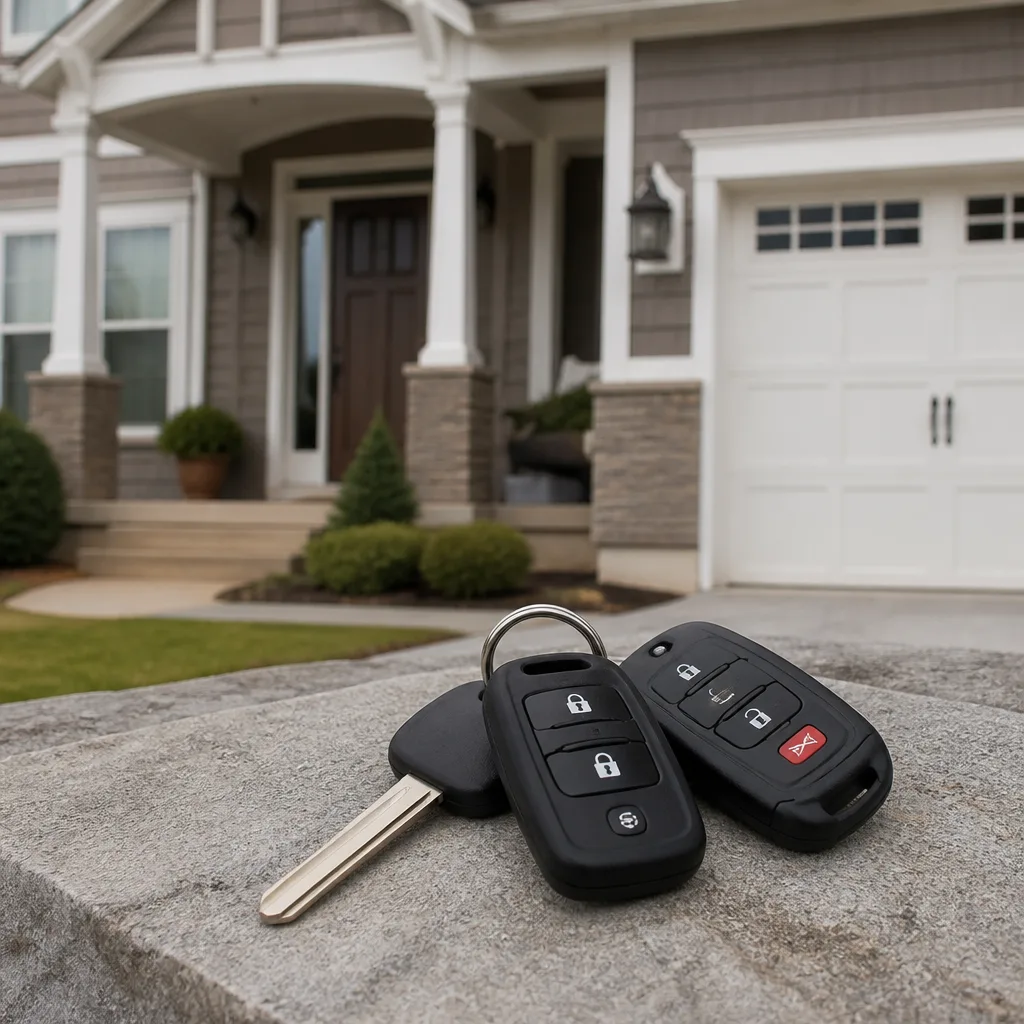 Car keys & fobs
Non-destructive entry first, always - and we re-key Schlage, Kwikset, and Baldwin locks on the spot while you watch
You get a price before we start. It does not change when we arrive. No surprises.
Get your free estimateCar Key Replacement Troubleshooting: Common Problems and How to Fix Them
Here is an honest admission from a locksmith who has taken thousands of emergency calls: roughly one in four car key emergencies we respond to in Gresham does not require a new key at all. It requires a $4 battery. Or a two-minute resync procedure. Or a five-minute repair of the ignition cylinder the key slides into. Drivers call us convinced they need a full car key replacement, and sometimes they do. But often the real problem is smaller, cheaper, and fixable without cutting or programming anything. This guide walks through the most common car key failures, how to tell a dead battery from a dead transponder chip, and exactly when to stop troubleshooting and call a professional. We will explain the difference between a worn key and a worn ignition, the model-year cutoffs that make DIY programming risky, and the red flags that signal a locksmith is recommending work you do not actually need.
Quick Answer
Most car key problems fall into one of four categories: a dead fob battery, a transponder chip that has lost sync with the vehicle, a physically worn or damaged key, or a worn ignition cylinder. Start by testing the simplest fixes first (replace the fob battery, try the spare key, resync the transponder), and only pay for a full car key replacement when those steps fail or the key is physically broken. Since 2012, Commodore Locksmith has walked Gresham drivers through this exact diagnostic process over the phone before anyone gets dispatched, because many issues never need a service call at all.
Styles & brands we work with
Table of Contents
- Symptom-by-Symptom Decision Tree: What Your Key Is Telling You
- Key Turns but Won’t Start: Transponder Problems
- Key Won’t Turn in the Ignition: Worn Cylinder vs. Worn Key
- Fob Completely Unresponsive: Battery vs. Programming Loss
- Key Physically Broken: Extraction vs. Replacement
- DIY Programming Kits: When They Work and When They Brick Your ECU
- Red Flags in a Locksmith’s Diagnosis
- Gresham-Specific Notes: Climate, Keys, and Local Realities
Symptom-by-Symptom Decision Tree: What Your Key Is Telling You
Every car key failure presents with specific symptoms, and those symptoms point to different root causes. Before you call any locksmith in Gresham or anywhere else, run through this decision tree. It will save you money roughly a quarter of the time, because the issue is genuinely something you can fix in a parking lot with no tools.
- Key turns in the ignition but the engine cranks and will not start. This is almost always a transponder signal failure, not a key-cutting problem. The chip inside the key is not being recognized by the vehicle’s immobilizer. Move to the transponder section below.
- Key will not physically turn in the ignition. Either the key is excessively worn, the ignition cylinder has internal wear, or the steering wheel lock is engaged. Jiggle the steering wheel gently while trying to turn. If that fixes it, it’s the steering lock, not the key. If not, read the ignition wear section.
- Fob buttons do nothing, but the key starts the car. Dead fob battery or lost fob programming. A $4 CR2032 battery fixes this more than half the time. Details in the fob section.
- Key snapped in half in the door or ignition. Three paths: extraction only if the key is broken cleanly and you have the other half, extraction plus a new cut key if you have a working spare to copy, or full replacement if both halves are gone. The broken key section covers this.
- Key is bent, chipped, or the blade is visibly worn smooth. The lock cylinder may already be suffering. Replace the key now before the cylinder gets damaged further. A locksmith can cut a fresh key from the VIN if you do not have a good spare.
We have fielded calls at 2 a.m. from drivers in the Gresham Station parking lot convinced they needed an emergency key replacement, and the actual fix was jiggling the steering wheel. A good diagnostic tree costs nothing and it clears up a surprising number of “emergencies.”
Key Turns but Won’t Start: Transponder Problems
A transponder key contains a small RFID chip in the plastic head. When you insert the key and turn it, the vehicle’s immobilizer sends out a signal that powers the chip and reads its unique code. If the code matches, the engine starts. If the signal fails, the engine cranks forever but never fires. In our experience at Commodore Locksmith, this is the single most common car key issue in Gresham, and many drivers misdiagnose it as a dead battery in the car or a failing starter.
Transponder failures break down into three categories:
- Dead chip from physical damage. Keys dropped on concrete, run through the washing machine, or left on a hot dashboard in an Oregon summer can suffer chip failure. The key looks fine, but the chip inside is silent. A replacement key with a new transponder is the only fix.
- Lost synchronization. Occasionally, a transponder falls out of sync with the vehicle’s computer. This can happen after a car battery dies completely, after an attempted jump-start, or after the vehicle sits unused for weeks. A resync procedure often fixes this without new hardware.
- Wrong key from a previous owner. Used car buyers in the Gresham area sometimes receive a key that opens the door and turns the ignition but was never properly programmed for the vehicle. The mechanical cuts match, but the chip code does not. A proper programming session resolves this.
Basic Transponder Resync Without Tools
On many Ford, GM, and Honda vehicles from roughly 2005 through 2015, a simple resync procedure can restore a transponder key that has lost sync. This works only when the chip itself is still functional. If the chip is physically dead, no resync will bring it back.
- Insert the key into the ignition and turn it to the “ON” position without starting the engine. Leave it in ON for exactly 10 minutes and 30 seconds. The security light on the dashboard should eventually stop blinking or go solid.
- Turn the key to OFF for 30 seconds.
- Repeat step 1 two more times. Most GM and Ford vehicles of this era require three ON cycles totaling about 30 minutes.
- After the third cycle, turn the key to OFF, then attempt to start the engine normally.
This procedure is slow and tedious, but it costs nothing and it works on a meaningful percentage of older domestic vehicles. It stops working on most vehicles after around 2016, when manufacturers switched to encrypted rolling-code synchronization that requires dealer-level diagnostic equipment. We tell Gresham drivers this every week: if your car is older than 2016, try the 30-minute resync before you pay for anything. If the security light never changes behavior during the ON cycles, the chip is dead and the resync will not help.
Key Won’t Turn in the Ignition: Worn Cylinder vs. Worn Key
This is where drivers waste the most money. A key that will not turn in the ignition is often blamed on the key itself, and the driver pays for a replacement key. Then the new key fails the same way within weeks. The real problem is the ignition cylinder, and replacing the key while the cylinder stays worn guarantees a repeat failure.
Here is how to tell the difference in Gresham, or anywhere, before you spend a dollar:
- Try the spare key. If the spare key also struggles or fails to turn, the cylinder is the problem, not the key. Two keys, both failing? Cylinder wear. End of diagnosis.
- Look at the key blade. A worn key shows visibly flattened ridges and smooth edges where there used to be crisp cuts. Worn keys happen after years of use, and the pattern degrades slowly. If the key looks visibly smooth but the spare works, replace only the key by copying it from the spare (not from the worn key, which copies the wear).
- Feel the ignition. A key that starts to turn, then binds halfway, suggests cylinder wear. Internal wafers or tumblers inside the cylinder have worn down. The key has become a poor match not because it changed shape, but because the cylinder’s internal components changed shape.
On many vehicles, replacing the ignition cylinder costs more than replacing the key, which is why some drivers push the key replacement first hoping for a cheap fix. That instinct is understandable, but it is backward. In Gresham’s wet winter climate, moisture and road grime work into ignition cylinders over time, accelerating internal wear. When a driver comes to us with a key that will not turn, we check the spare first. It is a thirty-second test that prevents a $250 mistake.
Fob Completely Unresponsive: Battery vs. Programming Loss
A remote key fob that does nothing when you press the buttons is either dead or desynced. The most common culprit is the coin-cell battery inside, and replacing it fixes the problem far more often than drivers expect. A CR2032 battery costs about $4 at any auto parts store or grocery store in Gresham, and most fobs can be opened with a small flathead screwdriver or a plastic pry tool.
Step-by-Step Fob Battery Swap
- Open the fob. Look for a small seam along the edge. Use a flathead screwdriver or a coin in the seam and gently twist. Do not force it; the plastic casing on some fobs is thin and cracks easily.
- Note the battery orientation before removing it. Most fobs use CR2032 or CR2025 cells. The positive side typically faces up, but photograph it before removal so you can match it.
- Slide the new battery into place, matching the orientation of the old one.
- Snap the fob casing back together firmly. Test the buttons.
If the fob still does nothing after a fresh battery, the fob has lost programming. This happens after a car battery dies, after the vehicle sits unused for several weeks, or after an attempted repair by someone unfamiliar with the vehicle’s immobilizer system. Programming loss requires re-registering the fob with the vehicle’s computer. On some vehicles, a resync procedure exists. On many newer vehicles, no DIY option exists, and the fob must be programmed by a locksmith with the right diagnostic equipment. The model-year cutoff matters, which the next section covers in depth.
Commodore Locksmith handles fob programming in Gresham daily. Before we program anything, we always test the battery first. It sounds obvious, but about one in five fob programming requests we receive is solved by a battery swap before programming ever begins.
Key Physically Broken: Extraction vs. Replacement
A key snapped in half inside the ignition or door lock is one of the more stressful car key situations. The good news is that extraction is usually possible. The better news is that if you still have both broken halves, you may not need a new key at all.
Here is how the options divide:
- Key broke cleanly, both halves present. A locksmith can extract the broken piece from the lock, then use the two halves to cut a new key. The cuts are read from the remaining blade and the design is matched to the factory code. This costs less than a full replacement from scratch.
- Key broke and you have a spare. Extraction plus a copy from the spare is the cheapest path. The spare provides an intact pattern to cut from.
- Key broke, no spare, no functional halves. This is a full replacement situation. The locksmith cuts a new key from the vehicle’s VIN or from the lock cylinder code. This requires proof of ownership and the vehicle’s VIN, which a legitimate locksmith will always ask for.
One warning from years of extraction work in the Gresham area: do not attempt to remove a broken key with tweezers, superglue, or a magnet. Tweezers push the broken piece deeper. Superglue bonds to the cylinder walls and ruins the lock. Magnets work only on steel keys, and most modern car keys are brass or nickel alloy. A broken piece pushed deep into the cylinder turns a $75 extraction into a $300 cylinder replacement. Leave it alone and call someone who does this daily.
Our Car Key Replacement in Gresham service covers extraction, copying from an existing spare, and full replacements cut from the VIN when no spare exists. The pricing depends on which path applies, and we quote it on the phone before anyone is dispatched.
DIY Programming Kits: When They Work and When They Brick Your ECU
DIY key programming kits are sold online and at auto parts stores, and they promise dealership-level programming for a fraction of the cost. The truth is more complicated. These kits work well on a specific slice of the vehicle population and fail dangerously on everything else.
The general rule: DIY programming works on many vehicles from roughly 1998 through 2010, depending on make and model. These earlier immobilizer systems used simpler code-based programming that an OBD-II dongle can often replicate. Above that range, manufacturers moved to encrypted, rolling-code immobilizers that require licensed diagnostic software. Attempting a DIY program on a 2017 or newer vehicle can corrupt the immobilizer data and leave the vehicle unable to start with any key, including the original.
- Legitimate DIY range: Most domestic vehicles through about 2010, many Asian imports through 2012, and some European vehicles through 2008. If your vehicle falls in this range and the kit specifically lists it as supported, the risk is low.
- Gray zone: Vehicles from roughly 2011 through 2015. Some kits claim support, but success rates vary wildly by manufacturer and even by trim level. Proceed with caution.
- Do-not-attempt range: Most vehicles 2016 and newer. The immobilizer systems on these vehicles use encrypted handshakes that require OEM-licensed equipment. An incompatible programming attempt can brick the ECU, and an ECU replacement runs $800 to $2,500 depending on the vehicle.
We have seen Gresham drivers bring vehicles into our shop after a failed DIY programming attempt, and the cost to undo the damage exceeded the cost of professional programming several times over. The money saved on a $50 kit evaporated within minutes, replaced by a four-figure repair bill. If your vehicle is outside the legitimate DIY range, professional programming is not an upsell. It is the only safe option.
Red Flags in a Locksmith’s Diagnosis
Most locksmiths are honest, but the car key industry has a documented bait-and-switch problem. An advertised low price becomes a much higher price once the job is underway, and drivers in Gresham are not immune. Here are the specific red flags we tell our customers to watch for when a locksmith diagnoses a car key issue.
- The phone quote is vague or has a suspiciously low starting price. A legitimate car key replacement has a knowable range based on year, make, and key type. If someone quotes “$19” or “$29” for a transponder key, the final bill will not be $29. Honest locksmiths quote a real range on the phone and honor it.
- The technician refuses to quote before arriving. Every legitimate car key job can be priced on the phone once the year, make, model, and key type are known. Refusal to commit to a price before dispatch is a tactic to trap you with the vehicle half-disassembled.
- The technician recommends replacing the ignition cylinder without testing the spare key first. Any competent locksmith tests a spare key before condemning the cylinder or the key. Skipping this test is either incompetence or upsell behavior. Either way, find someone else.
- The technician cannot explain the diagnosis in plain language. If the explanation is jargon-heavy and evasive, or if the recommendation changes when you ask questions, that is a problem. A real expert can explain exactly what failed and why, in terms you understand.
- They recommend a full replacement for a fob that is merely unresponsive. An unresponsive fob is a battery issue about half the time. A locksmith who jumps straight to replacement without testing the battery is rushing to the highest-revenue outcome.
- No proof of ownership is requested. A legitimate locksmith always verifies you own or are authorized to use the vehicle before cutting a key from the VIN. Skipping this step is a legal and security problem, and it is a clear sign of a disreputable operation.
At Commodore Locksmith, we give a firm quote on the phone before anyone is dispatched, and the price we quote is the price on the invoice. No call-out surcharge on arrival, no discovered-extra-work surprises. We have built our Gresham reputation on this principle because the alternative is an industry problem we refuse to participate in.
Gresham-Specific Notes: Climate, Keys, and Local Realities
Car key problems in Gresham are shaped by the local environment in ways drivers in drier climates never experience, as we explore in The Complete Car Key Replacement Guide for Gresham Homeowners. The Pacific Northwest’s wet winters and damp springs affect keys and locks more than most people realize, and understanding how Gresham’s climate interacts with car key hardware can prevent problems before they start.
Moisture is the biggest factor. Gresham receives roughly 45 inches of rain annually, and that moisture seeps into ignition cylinders through the key slot. Over time, water accelerates internal corrosion and accelerates cylinder wear. Keys worn down by years of insertion into a corroding cylinder fail earlier here than they would in Phoenix. The fix is awareness: if your key starts feeling sticky or requires extra force to turn during the wet months, address it early. A replacement key cut from a spare is far cheaper than an ignition cylinder replacement forced by a key that sheared off inside.
Fob batteries also die faster in cold, wet conditions. A CR2032 battery that lasts three years in a warm climate may last two in Gresham’s damp winters. Drivers who park outside (which most Gresham residents do) see more winter fob failures than garage-parked drivers. If your fob range shrinks or buttons require multiple presses, replace the battery before it dies completely. A $4 battery replaced proactively beats an emergency call at 11 p.m. in a Fred Meyer parking lot.
We also see a specific pattern in Gresham’s used car market. Vehicles sold through local dealers and private sales sometimes come with only one key, and that key is often heavily worn. If you recently bought a used vehicle in the Gresham area and received a single worn key, get a spare cut and programmed now, while the original still works well enough to copy. Waiting until the only key fails turns a $150 job into a $350 job.
From your front door to your car door, Commodore Locksmith has handled the full range of Gresham key and lock problems since 2012. We are equally at home cutting a basic car key and working on high-security hardware, because the same precision applies to both. One call covers home, business, and vehicle, and we answer at every hour, not just from nine to five. Locked out or leveling up your security, the number is the same.
Common Mistakes to Avoid
- Replacing the key when the cylinder is the problem. This is the most expensive mistake we see in Gresham. If the spare key also fails to turn, the cylinder is worn. A new key will not fix it, and the old cylinder will destroy the new key’s sharp cuts within months.
- Attempting to extract a broken key with household tools. Tweezers, glue, and magnets all make the problem worse. A broken piece pushed deeper into the cylinder quadruples the repair cost. Leave extraction to someone who does it daily.
- Ignoring fob battery warnings. Reduced range and multiple button presses are early signs of a dying fob battery. Most drivers ignore these signs until the fob dies completely at the worst possible moment. Replace the battery at the first sign of weakness.
- Using a DIY programming kit on a vehicle newer than 2010 without checking compatibility first. The cost of a bricked ECU dwarfs the cost of professional programming. If the kit does not explicitly list your year, make, and model, do not use it.
- Waiting until you have only one working key to make a spare. A single worn key is a ticking clock. Once it fails, the replacement cost rises because there is no pattern to copy from. Every Gresham driver should have two working keys at all times.
- Accepting a vague phone quote. Car key work is quotable on the phone. If a locksmith refuses to commit to a price before dispatch, find someone else. The phone quote should be the invoice price, period.
- Trying to force a key that is fighting you. A key that requires real force to turn is a key about to break. Forcing it is how keys snap off inside the ignition, converting a $20 problem into a $300 extraction and cylinder repair.
When to Call a Professional
Some car key problems genuinely need a locksmith, and delaying the call makes them worse. If your key is physically broken and a piece remains inside the lock, call immediately; every hour that passes risks pushing the piece deeper. If you have only one working key and it is heavily worn, call before it fails completely. If your vehicle is a 2016 or newer model that needs new key programming, call. If you have tried the basics (battery, resync, spare key test) and the problem persists, stop troubleshooting and call. Our team at Commodore Locksmith offers free estimates in Gresham. Call (855) 473-5097, describe the symptoms, and we will quote you a firm price before anyone is dispatched. The price on the phone is the price on the invoice, and it includes the full diagnosis.
Frequently Asked Questions
In Gresham, a basic transponder key with programming typically runs $120 to $250 depending on the vehicle’s year, make, and model, while a push-to-start smart key or proximity fob runs $200 to $450. The exact price depends on whether a working spare exists to copy, whether the key must be cut from the VIN, and what programming the immobilizer requires. Call (855) 473-5097 for a firm quote for your specific vehicle before anyone is dispatched.
A key that turns but will not start the engine almost always has a transponder failure, meaning the chip inside the key is dead, out of sync, or was never programmed for your vehicle. The engine cranks because the mechanical key still turns the ignition, but the immobilizer will not allow ignition. Try the spare key; if the spare starts the car, the original key’s chip is dead and needs replacement or reprogramming.
Yes. At Commodore Locksmith, the quote you receive on the phone is the price on the invoice. If the diagnosis reveals a different problem than initially described, we call you and get approval before any additional work proceeds. There is no call-out surcharge added on arrival, and the price never changes between the curb and the invoice.
Yes. A locksmith with the right equipment can cut a new key from your vehicle’s VIN, then program it to the immobilizer. You will need to provide proof of ownership (typically your registration or title and a photo ID) and the vehicle must be present at the time of service. This is a routine job, though it costs more than copying from an existing spare.
Most car key replacements in Gresham are completed in 30 to 60 minutes on site, including cutting and programming. Copying from an existing spare is fastest, usually under 30 minutes. Keys cut from the VIN with no spare take longer due to ownership verification and the additional programming steps, typically 60 to 90 minutes.
A legitimate locksmith gives a firm phone quote, asks for proof of ownership before cutting vehicle keys, can explain the diagnosis in plain language, and arrives in a marked vehicle with professional equipment. Ask whether they are insured and bonded, and check their stated service area. Legitimate locksmiths serving Gresham will quote a real range for the specific year, make, and model, not a suspiciously low teaser price. For help vetting providers, see our guide on Choosing the Right Locksmith Brand: A Buyer’s Guide for Gresham.
The Bottom Line
Car key problems are more diagnosable than most drivers realize. A dead fob battery, a desynced transponder, and a worn ignition cylinder are all distinct issues with distinct fixes, and misdiagnosing them wastes real money. Start with the cheapest tests: replace the fob battery, try the spare key, attempt a basic resync on older vehicles. Only pay for a full car key replacement when those steps fail. And when the diagnosis is genuinely beyond a DIY fix, call someone who quotes a firm price on the phone and stands behind it. Commodore Locksmith serves Gresham drivers with car key replacement, emergency locksmith service, and rekeying services across the full range of hardware, from basic to high-security. Call (855) 473-5097 for a free estimate.
Written by the team at Commodore Locksmith, serving Gresham since 2012. Explore more guides & resources on our blog.